Sunday, April 3, 2011

52 Week Plastic Challenge: 13 weeks

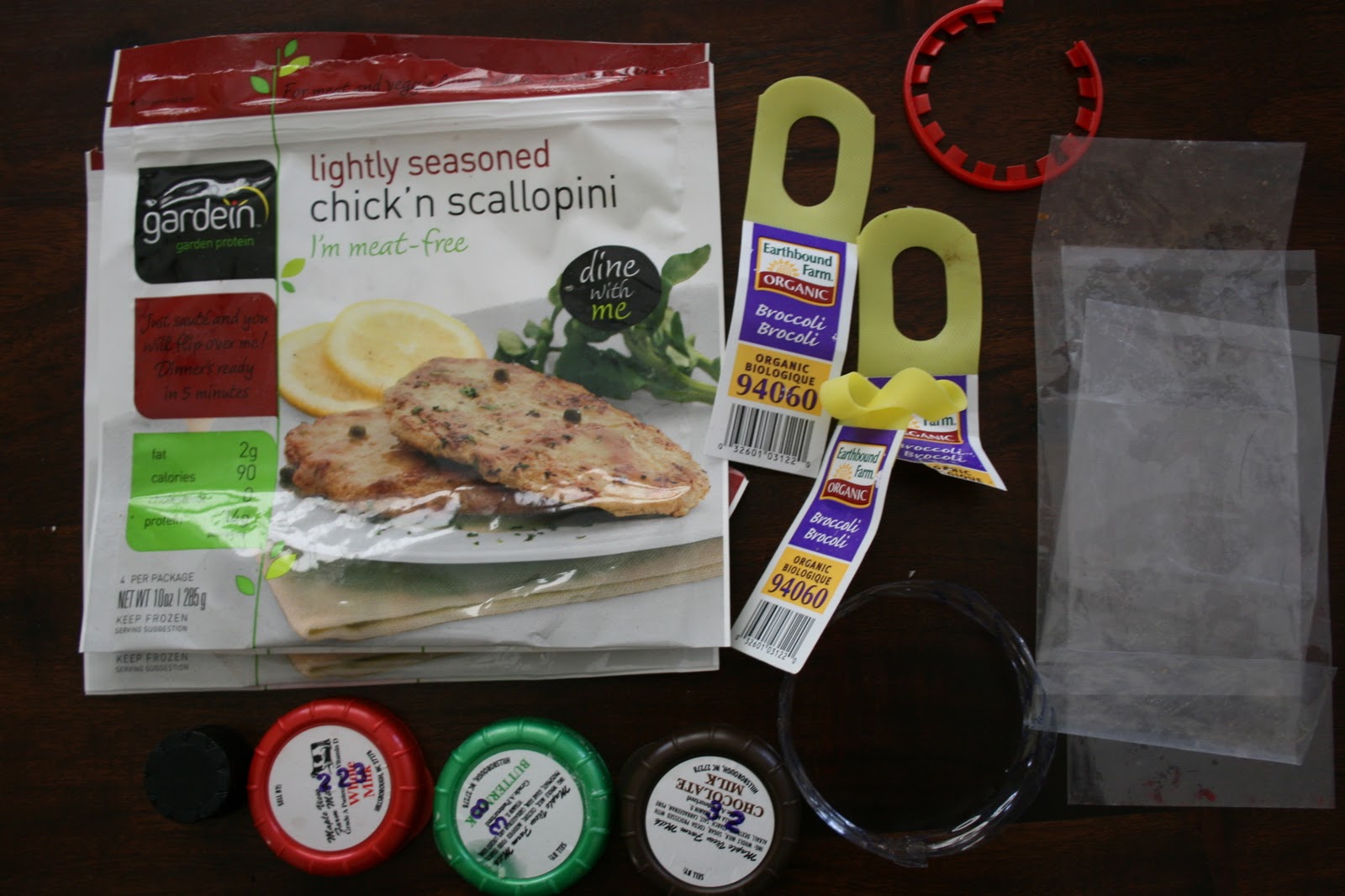
Back at the end of September, I challenged myself (which meant my family, too!) to a week of no foods in plastic.  Before the plastic-free food week, I took the My Plastic Free Life Show Your Plastic Challenge by collecting all of our plastic waste for one week.  This is what one week of plastic looked like before we started focusing on plastic-free food:
View the entire post here :)
As part of my New Year's "More Than Resolutions"... I committed to taking the Show Your Plastic Challenge for all of 2011!!  The purpose of me taking the challenge for the entire 52 weeks of the year is to get a gauge of what we use the most, understand habits and patterns, and most importantly figure out ways to change the amount of plastics we use.

The first quarter of the year is now over, which means I've been collecting our family of five's plastic waste for 13 weeks straight!!!

During the first quarter of the year, I focused on not purchasing breads, cereals, wraps/tortillas, pre-packaged pastas, baked goods... err...cookies (oh how I miss Liz Lovely Chocolate Moose Dragons!!), and milks in paper/plastic containers. (<--my husband has given up his half and half!!)  Here's how I'm doing it: 

Breads, wraps/tortillas, cookies = homemade (on occasion from Panera put in a paper bag)
Cereal = bulk granola
Pasta = bulk or homemade
Dairy/nut milks = local milk in glass jars or homemade almond milk  (though I did fall off the wagon a couple of times and have not fully committed to making my own yogurt.)

We have also started paying very close attention to plastics when we go out to eat.  Requesting reusable condiment dishes and avoiding some of our favorite places to eat simply because of how much disposable plastic/styrofoam they use.  Check out these tips for How to Request No Plastic and Get What You Ask For.

Sooo....this is what 13 weeks of plastic for our family of 5 looks like....
January 2-8
January 9-15
January 16-22
January 23-29
January 30- February 5

February 6-12
February 13-19
February 20-26
February 27- March 5
March 6- 12
March 13-19
March 20-26

March 27- April 2

Have you taken the Show Your Plastic Challenge??  Check out my guest post on My Plastic Free Life about why to take the challenge!!  Collect Your Plastic.  Change Your Life.

Friday, April 1, 2011

Plastic Bags: My Letter to Senator Goolsby

Yesterday, I FINALLY sat down and wrote NC Senator Thom Goolsby regarding his recent sponsorship to repeal the plastic bag ban in the NC Outer Banks.  I made the decision to share my letter on my personal Facebook account and now here in hopes that others will also choose to write him.  Please feel free to use my letter, edit it to make it your own or start from scratch.  


Whatever you do... just do something :) 

The proposed Bill to Repeal the Ban on Plastic Bags in Certain Coastal Areas: http://www.ncga.state.nc.us/Sessions/2011/Bills/Senate/PDF/S318v0.pdf

You can email Senator Goolsby at this address: Thom.Goolsby@ncleg.net

Senator Goolsby,

My name is Danielle Richardet, my husband Aaron has been in contact with you regarding your recent sponsorship to repeal the plastic bag ban in the North Carolina Outer Banks.  I felt that I should also connect with you to voice my concerns about repealing the plastic bag ban.  While I may not have scientific degrees to share with you my expertise, what I do have is an active role in our community focusing on litter.  As a family, we spend a good amount of time cleaning up the litter that others leave behind.  One does not need a degree to see that plastic bags are a huge problem, even our three children are quick to point out the insidious amount of plastic bags that litter our roadways, waterways and beaches.  As I'm sure you are well aware, plastic bags are the 2nd most commonly found item during beach and waterway clean ups. 

Of more than ten million pieces of garbage picked up on ocean beaches in 2009 during International Coastal Cleanup Day... 1,126,774 were plastic bags.  ***7,288 of those plastic bags were removed from North Carolina.*** Plastic bag debris was second only to cigarette butts/filters (21%) in number and accounted for full 11% of ALL marine debris picked up.    


But, the fact that the plastic bags are littered (and not always intentionally) isn't the only concern that I have.  I'm aware of the study that shows plastic bags using less resources than paper bags.  While that may be true, this isn't about paper vs. plastic.  Whether or not paper uses more energy and plastic uses less... there are consequences to both of these single-use disposable products.  When it comes to plastic bags, there are factors that aren't relayed in the paper vs. plastic studies such as how countless animals die from plastic ingestion every single year. 


At least 267 different species are known to have suffered from entanglement or ingestion of marine debris (or more appropriately plastic pollution) including seabirds, turtles, seals, sea lions, whales and fish.  Studies on dead turtles reported ingestion of plastic pollution in 79.6% of the turtles that were examined from the Western Mediterranean (Tomas et al. 2002), 60.5% of turtles in Southern Brazil (Bugoni et al. 2001) and 56% of turtles in Florida (Bjordal et al. 1994)2  See: http://www.unep.org/regionalseas/marinelitter/publications/docs/plastic_ocean_report.pdf

Some other factors that must be understood and taken into account are:

  • Plastic bags are made from polyethylene which is a byproduct of petroleum and natural gas.  Both sources are nonrenewable and create more greenhouse gases and increase our dependency on foreign oil.  
  • All of the chemicals used in the process of creating plastic bags are toxic and cause damage to the environment as well as people. According to the US EPA, 35 of the 47 chemical plants ranked highest in carcinogenic emissions produce plastics (BEC). DEHP is a chemical used to stabilize the plastic in plastic bags. DEHP has been shown to decrease sperm levels and even act as a neurotoxin. One of the key ingredients in manufacturing plastic bags is vinyl chloride. Vinyl chloride is a proven carcinogenic and may also cause liver, kidney, and brain damage.  
  • Once the extremely toxic chemicals are turned into bags, the bags still need to be transported to their destination. These plastic bags are often transported from overseas on ships and then put on trucks for distribution across the country. If people bring their own bags then there would not be a necessity for any of the transportation or disposal costs. All the excess fossil fuels used to bring plastic bags around the country would be eliminated. The shipping resources could be put to better use and the fossil fuels can not be used at all. 
  • Between 500 billion to 1 trillion plastic bags are consumed worldwide every single year.  Taking the low worldwide consumption number of 500 billion bags used annually, if 99.9% of plastic bags were recycled that would leave 500 million plastic bags to be littered or landfilled.  The recycling recovery rate for plastic bags is between 1 and 3%.  Unfortunately, when it comes to plastic bags recycling is not the answer.  

Last May, while at Figure 8 Island we were hit with a reality that we cannot turn away from.  You can see the photos from our day at the beach here: http://itstartswithme-danielle.blogspot.com/2010/05/whats-so-different.html

Below is a Press Release that was sent to me by Dr. Wallace J Nichols.  I believe you will find it interesting, eye-opening and no doubt helpful in your decision making process.

Thank you for your time on this important issue of environmental and economic responsibility,

Danielle Richardet
Phone number


ATTACHED:  photo of degrading single use plastic bag (from Wal-Mart) at Wrightsville Beach, NC.  The bag was breaking down into smaller pieces that had to be scooped up with sand.


-----Original Message-----
Subject: Press Release: Our Plastic Food Chain -or- The Turtle Who Pooped Plastic: new report chronicles effects of decades of plastic pollution on sea turtles


PRESS RELEASE


FOR IMMEDIATE RELEASE

(explicit research photos available at http://www.seaturtle.org/plasticpollution/)


Contact:  Wallace J. Nichols, PhD                                                                                                     
Research Associate, California Academy of Sciences
+1.831.239.4877
wallacejnichols@me.com

Our Plastic Food Chain -or- The Turtle Who Pooped Plastic

As ocean pollution experts meet in Hawaii, disturbing new report chronicles effects of decades of plastic pollution on sea turtles—and what we can do about it.

 Honolulu, 26 March 2011
In 2009, marine biologists with Disney's Animal Programs in Melbourne Beach, Florida, discovered a green sea turtle that was having trouble digesting food. They found that a piece of plastic had lodged in the turtle's gastrointestinal tract. When biologists removed the obstruction, the turtle defecated 74 foreign objects in the subsequent month. Among the items documented were four types of latex balloons, five different types of string, nine different types of soft plastic, four different types of hard plastic, a piece of carpet-like material, and two tar balls to boot.

The list of items from this one turtle read like a catalog of a growing and deadly concern for virtually all marine animals—single-use plastics are having a lethal effect on animals living in the sea.

Experts on plastic pollution from around the world, determined to solve this growing problem, gathered this week for the Fifth International Marine Debris Conference in Honolulu, Hawaii, a mecca for green sea turtles.
Now, in a recent editorial published in the Marine Turtle Newsletter, marine biologists Colette Wabnitz, PhD, of the University of British Columbia and Wallace "J." Nichols, PhD, of the California Academy of Sciences, lay out the entire disturbing history of plastics in the ocean, from the first scientific report to the latest surveys, to call attention to the concerns from 1972 to today. The report is grim, but provides a ray of hope in the form of proactive steps that can and should be undertaken to curtail overproduction and careless discard of single-use plastics.
The authors were careful to acknowledge that certain plastics have done much good in the world. The report firmly lays the blame at the feet of so-called "disposable" plastics: commonly used beer cups, water bottles and caps, grocery bags, plastic utensils, and so forth, intended to be used just once and thrown away. While these plastics are cheap and convenient, they are also durable and buoyant—making for a potent and deadly combination in the water. 

Though plastics like these do break down from exposure to sunlight and other elements, the molecules of plastic never fully biodegrade—they just break into smaller and smaller pieces but never completely disappear. Eventually, many of these small particles get blown or washed into tributaries that feed rivers which flow to the ocean where plastics coalesce in ocean currents. Here they swirl in the eddying currents forming a  sort of plastic soup where they float virtually forever and are often—the whole pieces and broken bits—ingested by the creatures of the sea. Once in the guts they can do great harm, or even kill, animals such as sea turtles.

Among the more startling facts reported is that 1 billion single-use plastic bags are distributed free of charge every day, of which an estimate 0.2-0.3% make their way to the ocean. Even that small percent means hundreds of millions of bags each year are left to float in the sea. In particular, the crisis has had a deleterious effect on sea turtles, which mistake the floating bags for jellyfish, a favorite food. 

All seven species of sea turtle are listed as endangered on the World Conservation Union's "Red List" of species in danger of extinction, a situation made even more urgent for many animals by plastic pollution.

"Last year I counted 76 plastic bags in the ocean in just one minute while standing in the bow of our sea turtle research boat at sea in Indonesia", reports Dr. Wallace J. Nichols, Research Associate at the California Academy of Sciences and coauthor of the review. "The science is becoming crystal clear: sea turtles and plastic pollution don't mix well. Sea turtles have spent the past 100 million years roaming seas free of plastic pollution, and are now sadly the poster animal for impacts of our throw away society on endangered species", states Nichols.

Other facts reported by Wabnitz and Nichols and explicitly illustrated in the accompanying photo library, include:

• Worldwide, plastic pollution is adding to the stress on endangered ocean wildlife, like sea turtles;

• Plastic can be ingested by or entangle sea turtles and can physically interfere with their nesting activity on beaches when it accumulates in large amounts;

• Approximately half of all sea turtles surveyed had ingested plastic items; and,

• Micro-plastics are accumulating in molluscs and crustaceans sea turtles eat.

The authors were not without suggestions for corrective measures to ameliorate or end the plague of plastics in the ocean. In addition to broader policy efforts recommended by the authors, were simpler—"off-the-shelf"—personal behavior solutions, including:

• Avoiding plastic-bottled beverages;

• Buying products with minimal or reusable packaging;

• Buying in bulk whenever possible to reduce packaging;

• Buying used items;

• Seeking out reusable shopping and produce bags like those made from renewable sources (e.g., natural fibres) and always bringing them along;

• For coffee and or tea – bring your own mug;

• For food – bring your own container.

"Sea turtle researchers and conservationists have a unique role to play in our cultural evolution away from plastic pollution, as we have watched the havoc the surge of plastic has caused first hand", notes Dr. Colette Wabnitz of the University of British Columbia.

"Sea turtle researchers from around the world have been submitting photos of interactions with plastic to the Image Library on Seaturtle.org. Given the amount of disposable plastic I see alongside the road everyday and the garbage my kids pick up whenever we go to the beach, the results are not surprising", added Dr. Michael Coyne, founder and director of SeaTurtle.org.

The pdf of the report and a collection of images from around the world depicting in excruciating detail the impact of plastic on sea turtles can be found at: 


Thursday, March 31, 2011

Plastic-Free Shampoo

Awhile ago, in an effort to eliminate another plastic packaged product, I attempted to use a shampoo bar in lieu of a liquid shampoo.  I tried for a month, to no avail... my normally silky smooth and shiny hair turned lackluster and felt... ummm... yuck.  So I switched back to my liquid shampoo and put off the idea of using a shampoo bar. Then, while visiting my friend Sara in October, she mentioned Lush shampoo bars... but mentioned something about them having a strong smell.  With Sara's comment in the back of my head, I went excitedly to Lush's website... picked out bar that I thought would have a least strong smell....almost hit the order tab... but reminded myself that just because it's not packaged in plastic doesn't mean that I shouldn't read the ingredient list.  And when I did....I paused....


While visiting Sara, we watched the film "Bag It"... so I quickly remembered how phthalates are often hidden in fragrance.  (and all of Lush's shampoo bars contain fragrance!!  boo!!)  So I decided to do what I always do when purchasing a new body product... I searched shampoo bars on the Environmental Working Group's "Cosmetics Database."  After much research and hesitation... I came across Chagrin Valley and got SUPER excited....researched some more and then placed my order!!!!
The reason I decided to order from Chagrin Valley was because of the low hazard scores on EWG's database .... I felt like if I was going to make the switch to a shampoo bar that I didn't want to sacrifice a a high-quality environmentally conscious product just to ditch the plastic.  They also have a really great faq section about shampoo bars AND I really love their "About Us" page which includes this:

"We do NOT use artificial preservatives, artificial fragrances, artificial colors, petroleum products, foam boosters, animal fats, or detergents.   Our products are never tested on animals, other than our very enthusiastic human volunteers!"

My first order, I chose to order sample bars.... with extra instructions to include "no plastic" in my order because I was switching to shampoo bars to avoid plastic.... and they listened!!!  

Since October, our whole family-- yes even our kids!!-- have been using a shampoo bar in lieu of liquid shampoo!!  And I would NEVER go back to liquid shampoo for so many reasons that go beyond packaging.
My hair feels amazing!!  It actually has body (something liquid shampoos stripped my hair of)...

Shampoo bars are so much easier to travel with.  Since it's not liquid... it doesn't have to be put in a plastic bag (double win!) and I never have to worry about it leaking (or spilling).  Tip: I keep the paper bag that the shampoo bar comes in and use it while traveling.... but when the bar is still damp, I just wrap it in a handkerchief  :D

BUT... one of my favorite things about using a shampoo bar over liquid is that my kids can't pour too much on their hands (or the floor) and waste it ;)

Oh yeah...as of today, I'm on a week of using no conditioner!!  Seriously!!  And my hair isn't a tangled mess ;)

OK....so want some good news?!  (I knew you would!)  Chagrin Valley Soaps are offering a 20% discount for my readers (that's you)!!  YAY!!  Here's how:

Go to www.chagrinvalleysoap.com.  Browse, read, play, and make a purchase on the site.  On the final page of the check-out, there is a 'COMMENT BOX'.  If you write the code: 'IT STARTS WITH ME' in the box, you will have a 20% discount** on your order!  You will initially be charged the full amount, and within 24 hours, a 20% discount will be refunded right back to you as a thank you for trying Chagrin Valley Soap's all natural handmade products.  ENJOY!! :D
**20% discount is valid for "first time orders/new customers" and expires on April 30, 2011**

Sunday, March 27, 2011

Kure Beach with the SandSweepers

On Saturday morning, my family and I took a 45 minute drive south to Kure Beach.  We met up with Liz who writes the blog Litter Sucks to help with a 30 minute beach clean up with the SandSweepers at the Kure Beach Pier.  Our family collected 140 cigarette butts and the grand total of butts was a whopping 998!!!

Check out Liz's blogpost here: SandSweepers Kick butt at Kure Pier

Kure Beach has a lot of different signage than Wrightsville Beach... lots of things are prohibited... including littering... hmmm....

My kids were really interested in the signs that have pictures of various pieces of litter stating how long they will last in our environment.  BUT... one thing we talked about is that the sign makes cigarette butts and plastics seem not that bad... what the sign doesn't relay is the harmful effects of plastics in our oceans/environment and the negative effects they have on wildlife.


Here's a photo of the litter we removed from Kure Beach in 30 minutes....different beach... same story...

Wednesday, March 23, 2011

Our Daily Ocean: Day 52

If you've been reading this blog for awhile, you may know that I only decided to create this blog after a nudge from my friend Tracy.  She's awesome like that... always giving me inspiration and encouraging me to do more.  On Tuesday, Tracy and her two kids joined me and my three kids at Access 36.
As always, our kids played A LOT while Tracy and I picked up litter for 20 minutes... BUT... it never fails that even while they're playing they take the time to run to us with handfuls of litter.  It's engrained in them...  when they see a piece of litter... they pick it up.  They understand that everything and everyone is connected... 
 My friend Julie and her family have been doing 20-30 minute clean ups at Wrightsville Beach throughout the winter.  Of course, they're counting the cigarette butts they find.  On Sunday, Julie and her family went to Access 36 and removed LOTS of litter... and 412 cigarette butts!!! 
 For some reason, I was actually surprised by that number.  The last two times we had been to Access 36, the cigarette counts were 92 (Feb.) and 101 (Jan.).  In fact, the last time we picked up over 400 was on New Years Day at Access 16.  As we picked up over 300-- on World Water Day-- I began to contemplate what the difference is.... I've come to two conclusions.  

1.  During January and February, the beach front restaurant "Oceanic" was closed for renovations.  During those months, we didn't find much restaurant litter or cigarette litter.  Coincidence??  I don't think so.
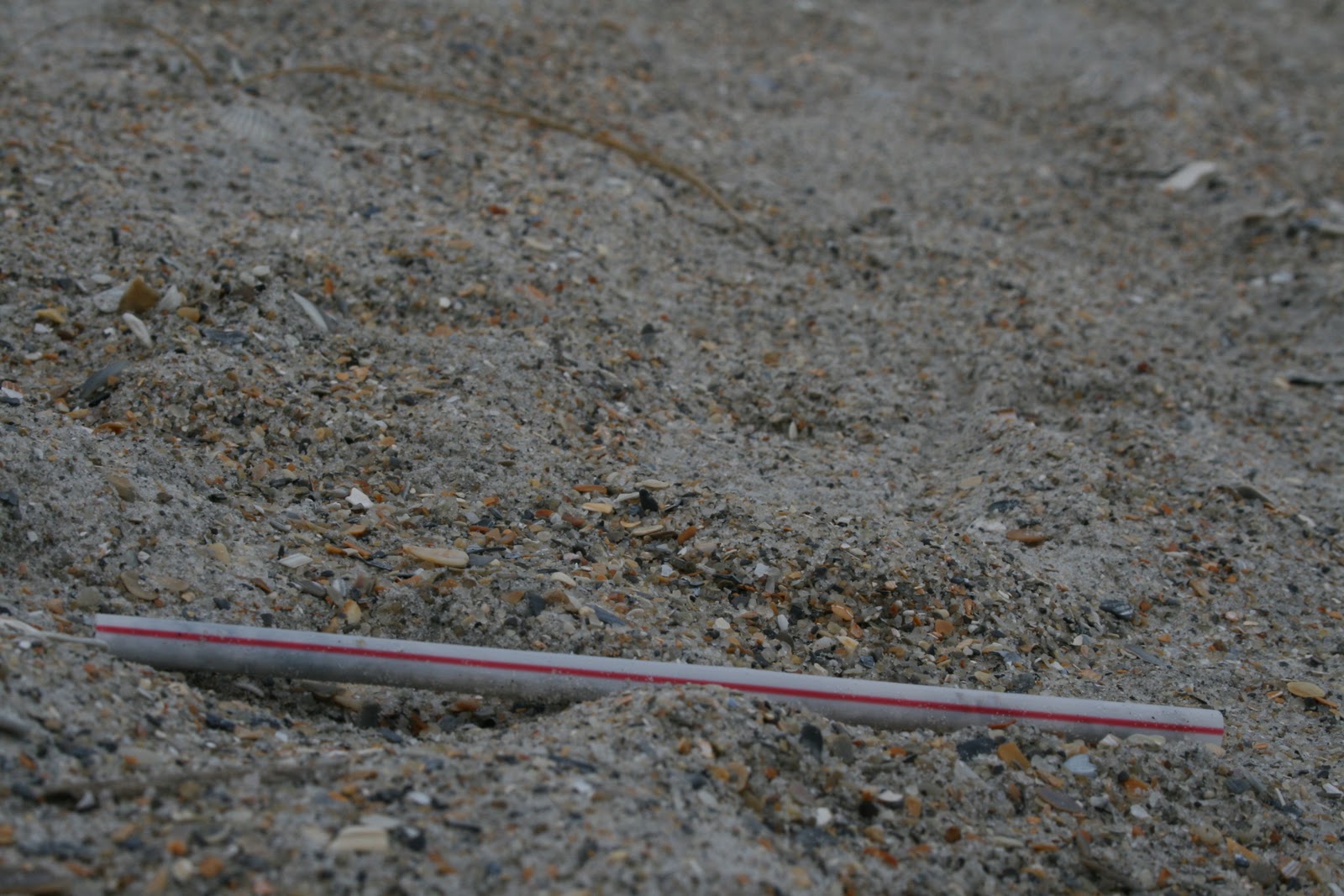
Fact:  We picked up 21 straws in 20 minutes.  The majority found around the pier... most clear or black "mixed drink straws"... and many still wrapped in paper.


2.  Spring is here.... but it's been so gorgeous that it almost feels like summer.  80˚ temperatures mean lots of people heading to the beach.  (... and I'm one of them!!)  I'm loving the warm weather... not loving how some people are trashing our beach.  (ummm.....by "our"... I mean.. my... your... his... her... their... EVERYONE's... including the animals we share it with ;) )

While my friend Tracy was on the phone with her husband... I went to take some photos of our kids playing when I heard her call my name and say: "You have to get a picture of this."  When I saw the mess... my jaw dropped.  I thought to myself, "...this is not the wrack line."  And Tracy and I both were perplexed... where in the world did all of those "fresh" butts come from??  (hmmm....)  When I got home and looked at this photo... I saw something I didn't see while at the beach...
Footprints.  Bird footprints.  And they're everywhere.... in a mess they didn't create.

20 minutes on March 22, 2011
Cigarette butts: 349
Total amount of cigarette butts removed from Wrighsville Beach, NC in 52 days: 

15,572

Saturday, March 19, 2011

Our Daily Ocean: Day 51

Back on Day 12,  I shared some observations that my husband and I had while we picked up cigarette butts at Wrightsville Beach.  Since we've been doing the 20 minute clean ups at Wrightsville Beach for over 7 months now... I had kind of forgotten about our observations and how things had changed over the winter.  BUT... while we were at Access 29 on Friday.... we noticed the return of the pair...
Over the winter, it was typical to find stretched out trails of cigarette butts... most likely because people go to the beach to walk.  When the weather is warmer, people spend time sitting... in one spot... and in turn (some) choose to use the beach as their personal ashtray...
 For so many months, we've gone out to Wrightsville Beach and had the beach to ourselves, but Friday was our first really "warm" day... so the beach was super busy... and I have to say that it's kind of strange going to the beach and it being packed!! ;)  But... it was great to be there enjoying the beach with other people.  It was even better when I leaned over several times to pick up litter and heard people say "thank you"... "I appreciate you doing that."

The other day, I watched this video that I think everyone should see....


We all have the power to do something... the question is... "What are you going to do??"


20 minutes on March 18, 2011


Litter by weight: 1 lb 7.4 oz
Cigarette butts: 173


Total amount of cigarette butts removed from Wrightsville Beach, NC in 51 days:
15,223

Tuesday, March 15, 2011

Our Daily Ocean: Day 50

On August 9, 2010... I, along with my 3 children, went to Access 43 to do our first 20 minute clean up at Wrightsville Beach.  Sunday, we headed back to that same spot to do our 50th clean up!!
Since that first day in August... we've removed more than 57 pounds** of litter from Wrightsville Beach!!!  (**On day 13, the litter wasn't weighed.)  And now... the cigarette butt tally has passed the 15,000 mark! (whoa!!)
My friend Sara--who writes The Daily Ocean blog and inspired me to do these 20 minute clean ups-- has collected 765.5 lbs of litter off of the beach in Santa Monica in 205 days!!  Sara and her husband Garen are currently in Chile getting ready to head out to the South Pacific gyre with 5 gyres.  Be sure to check in with The Daily Ocean to see what's happening as they prepare for the expedition.
Once we finished with our 20 minutes, I met Katie Harden of WWAY to talk about cigarette butt litter and The BaitTanks that have been installed at Wrightsville Beach!  Check out the story that also includes Mark Armen and Mayor of WB, David Cignotti. 

20 minutes on March 13, 2011
86 cigarette butts


Total amount of cigarette butts removed from Wrightsville Beach, NC in 50 days:
15,050

Sunday, March 13, 2011

Our Daily Ocean: Day 49

For the first time in a LONG time... on Saturday...while I was picking up litter at Access 16... a man-- who happened to be walking his dog-- stopped and said, "Are you picking up cigarette butts??.... thank you." :D
Of course, if you've been reading this blog... I pick up cigarette butts and a whole lot of other litter off of my local beach.  The reason I have focused so much on cigarette butts is because there are SOOOOO many.  I feel like if we can change the mindset of this habit to flick cigarette butts to the ground... then it can help create even more consciousness to the entire litter problem plaguing our world.
Looking at the photo above... do you see what I see??  Condensed and trapped toxins in the cigarette filter.  To quote my friend Mark:  "Once that filter hits water-- a stream, a lake, a river, an ocean-- those toxins leach out."  Those toxins happen to be deadly to fish... and that's "no bueno!!"

On Wednesday, my friend Mark-- creator of The Bait Tank-- visited us.  While he was here, he got to see the two Bait Tanks that are currently installed at Wrightsville Beach.  Here's the newest one... donated to the Town of Wrightsville Beach by Butch and Bonnie.  YAY!!!

More Bait Tank news:  Mark is a finalist in the Green Awards!!  Voting is happening right now!!  Check out his video and vote everyday until March 27 at https://www.thegreenawards.com/Default.aspx?v=74


20 minutes on March 12, 2011
Litter by weight: 1 lb 2.1 oz
Cigarette butts: 103

Total amount of cigarette butts removed from Wrightsville Beach in 49 days:
14,964

Wednesday, March 9, 2011

Our Daily Ocean: Day 48

On Monday... yes, Monday!! (feel free to call me a slacker!!)... we did another 20 minute clean up at Wrightsville Beach.  I've been procrastinating writing this blogpost for so many reasons.... but this morning I was given inspiration (on Facebook of all places) from my friend Harry who writes the blog "The Flotsam Diaries."... I guess I just needed a couple of days to sit on Access 20 and process everything that's been swirling through my head...

Access 20 is where my family and I picked up 1,833 cigarette butts in 20 minutes on September 19, 2010.. that was only our 11th clean up.  When I posted about that day... I remember feeling so sad and frustrated... I actually cried about what we removed from the beach that day.  BUT... then I was happy at the same time because it was in that post that I shared with you all that I had entered what I'm doing in the Brita FilterForGood Film Project... :)   If you haven't seen the film yet... please check it out and share.

(Also, I have so much gratitude for everyone who has commented and shared my project-- the film has been shared on Facebook 2,369 times!!!  YAY!!!  Thank you thank you thank you!!!!)

The only way any of this [litter problem] is going to change is if we help others become conscious to the problem.... this is what 20 minutes looked like on September 19...

Thankfully, we didn't remove that much of anything from Access 20 on Monday.  But we did remove a good amount of straws.  (Don't worry, I'm not going to rant today!! ;) )  

By now, I'm assuming that everyone knows that our family of five chooses to not use straws-- one of our many lessons and changes that we've made because of beach clean ups.  This morning I learned about a fourth-grader who has started a "campaign" of sorts to encourage people to go "Straw-Free."  Once he learned that over 500 million straws were used in the U.S. EVERYDAY... EVERYDAY!!... he stopped using straws and started the Straw-Free Project... check out the site and pledge to go straw-free for at least a month!!  (please)
 After reading my post about our 46th clean up, Jennifer-- who writes the blog Jennasaurus-- and a new resident of Wilmington (yay!!)... got inspired and headed out to Wrightsville Beach to do a beach clean up!!!  LOVE it!!!  Read her post about her beach clean up here: Making A Trip To The Beach Count
Now, that's some red lipstick!!!


20 minutes on March 7, 2011


Litter by weight: 5.8 oz
Cigarette butts: 76

A lot has changed since September.
Total amount of cigarette butts removed from Wrightsville Beach, NC in 48 days:
14,861